MunchMatch.me
Tinder for dinner: swipe recipes together until everyone says “Munch!” to the same dish.
- Players per room
- 2–10
- Recipes in the deck
- 2893
- Game modes
- 5
Own product – concept, design & full-stack development
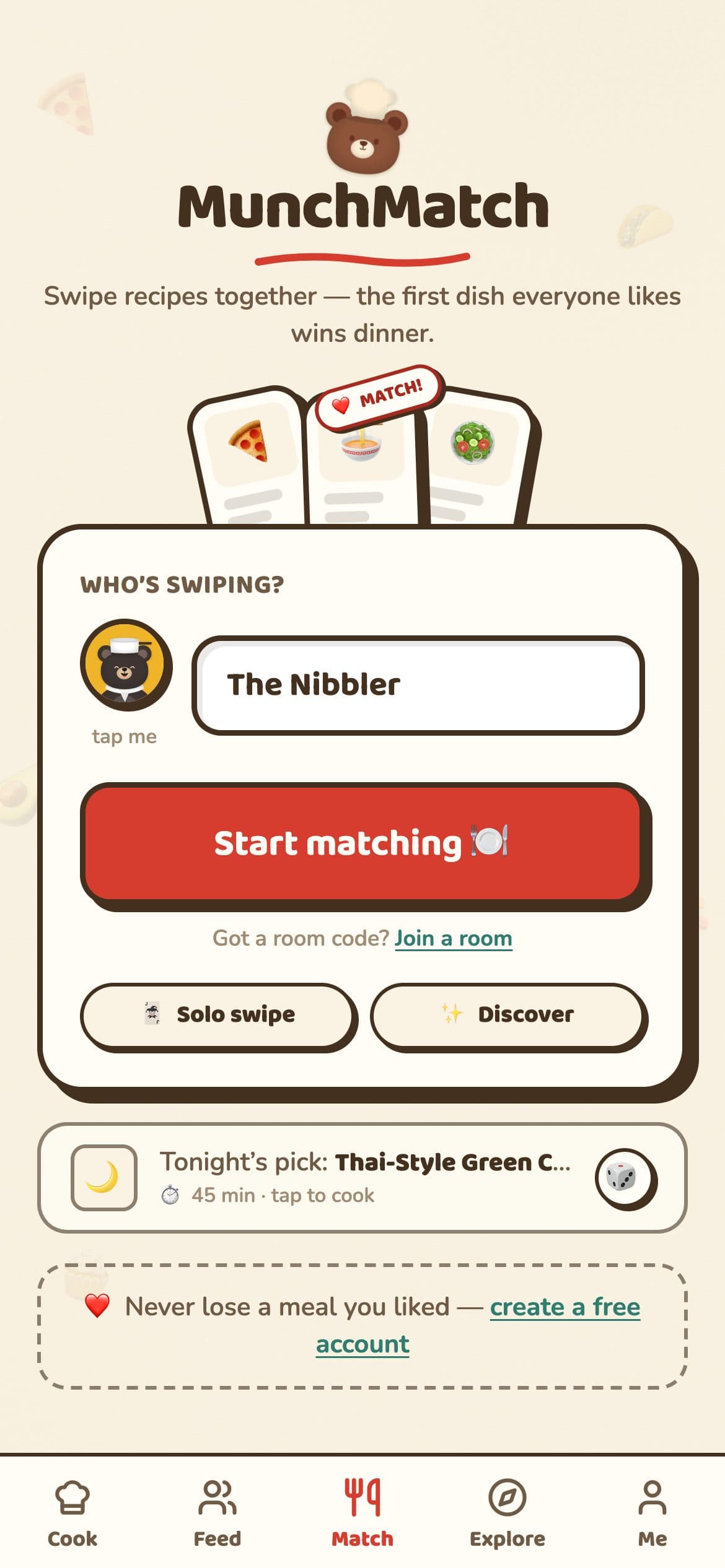
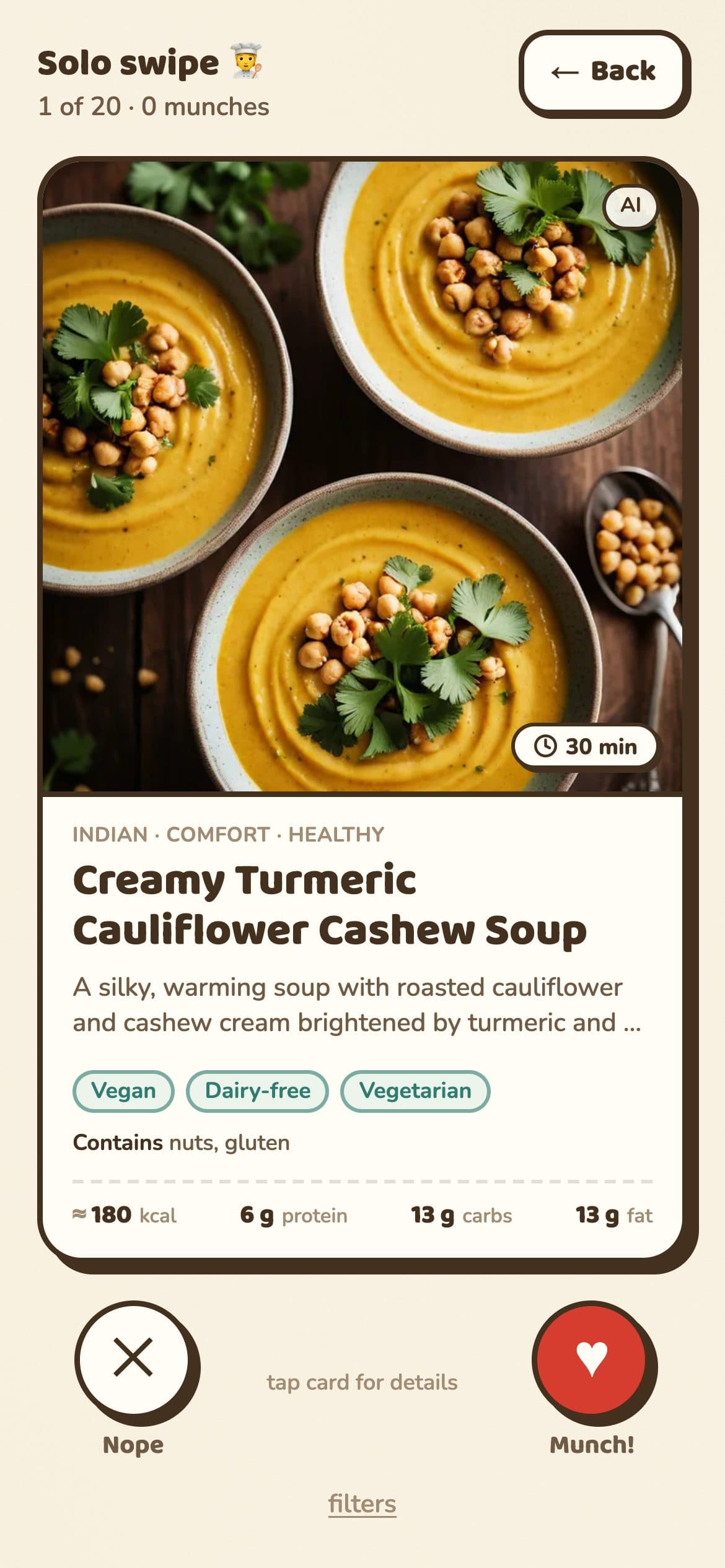
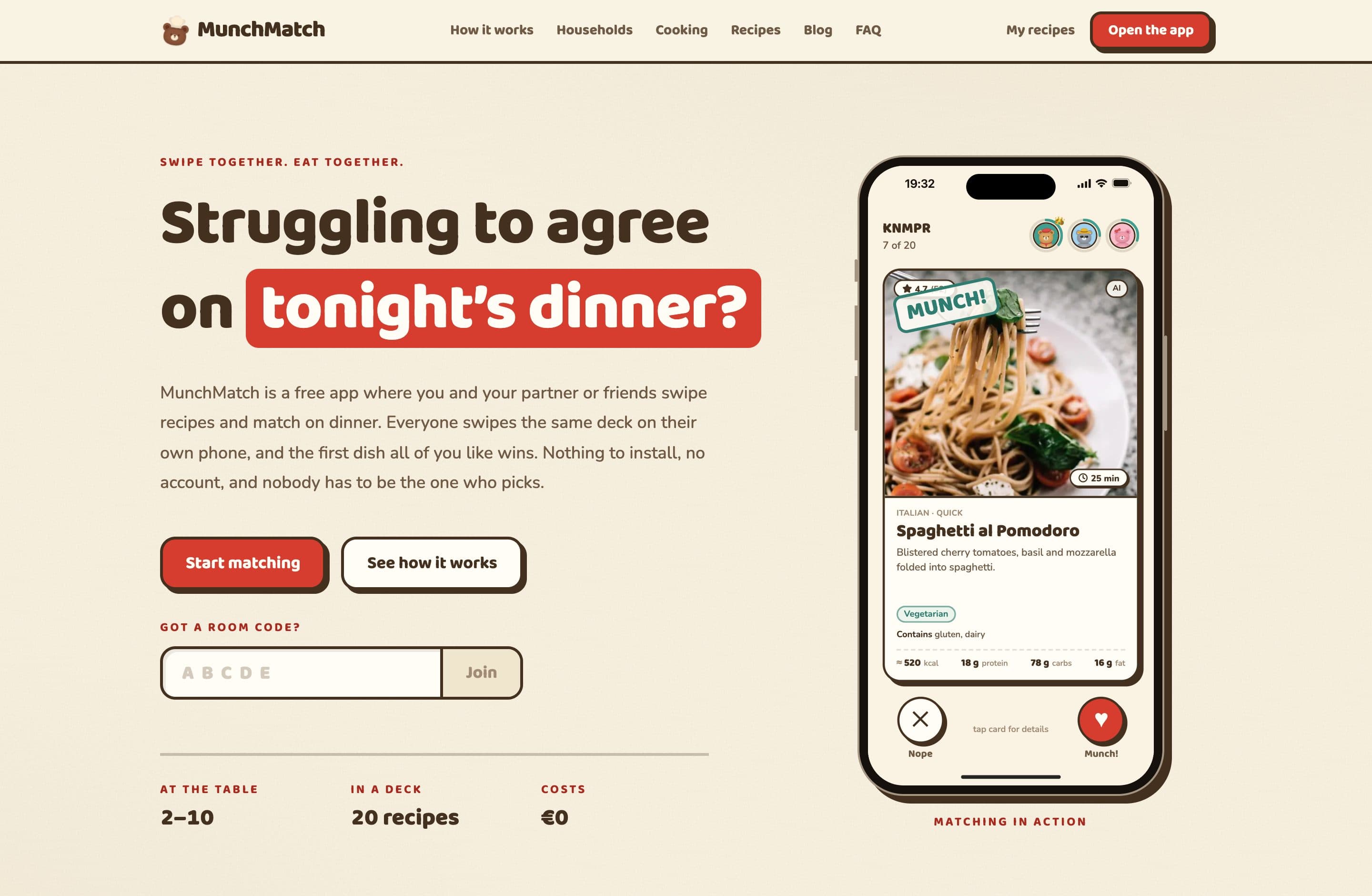
MunchMatch ends the endless “what are we eating tonight?”. Up to ten people join a room with a five-letter code, everyone swipes the same deck on their own phone – and the first dish all of them like wins. Nothing to install, no account, free. And it keeps going from there: step-by-step cooking mode, shopping list, a week plan for the household.
A Turborepo with four apps: the marketing site with recipe and blog SEO pages, the game app as a PWA, a Payload CMS on PostgreSQL for recipes, decks and admin, and a dedicated Socket.io server for rooms, matches and votes in real time. A shared package holds the typed socket protocol so client and server never drift apart. Frontends run on Vercel, backend and realtime server on a self-hosted VPS.
- Players per room
- 2–10
- Recipes in the deck
- 2893
- Game modes
- 5
- Account needed
- —
- Price
- €0
The app
Screens from the app
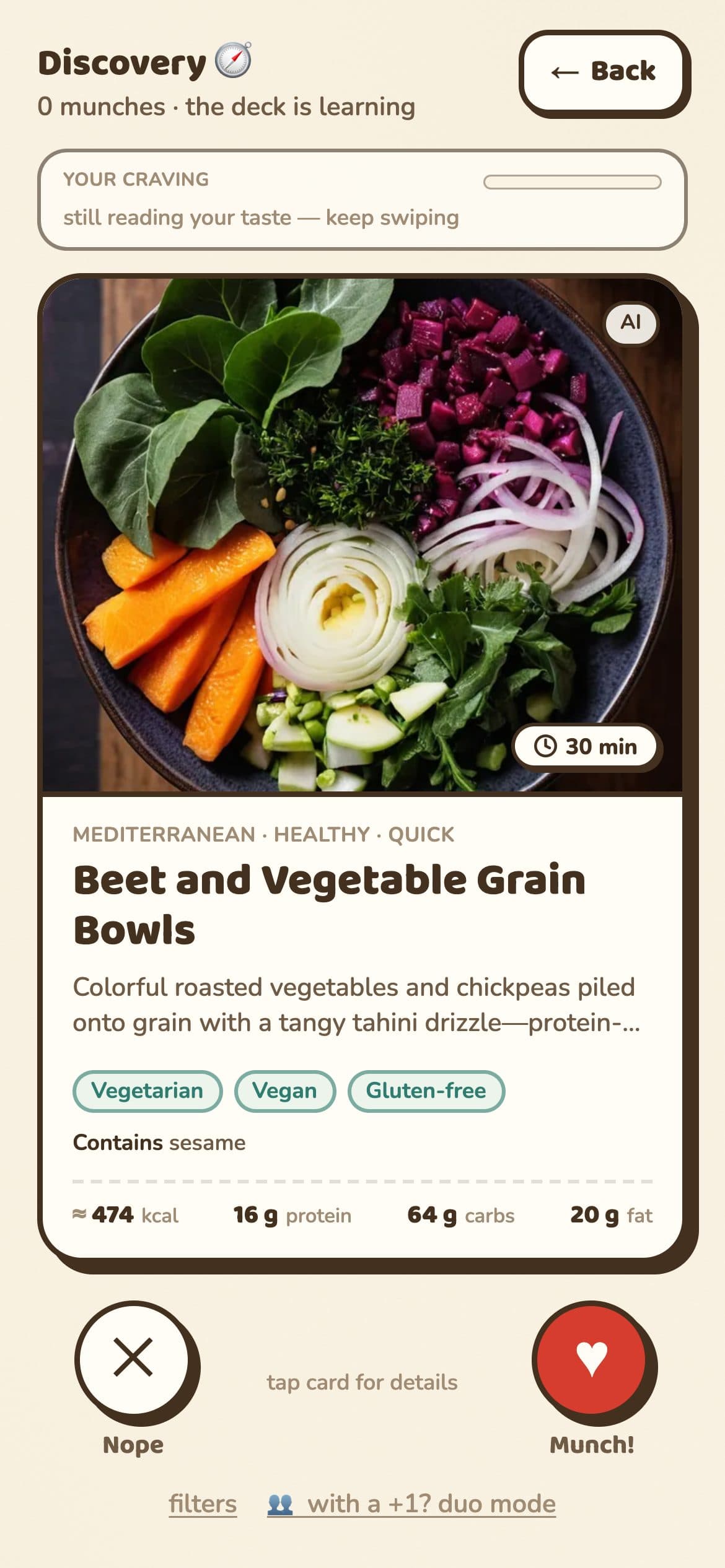
A deck that learns
In discovery mode every munch counts for cuisine, vibe, cooking time, diet and star ingredient, a nope a third as much against. Two cards per hand deliberately ignore your taste so the deck keeps exploring; old swipes fade after two weeks.
AI content pipeline
Around 2,900 recipes came out of a custom pipeline: facts are extracted deterministically, rewritten into original recipes by a language model, then validated and de-duplicated automatically.
Generated food photos
Every recipe image is AI-generated from a description of the dish, never from someone else’s photo – and openly labelled “AI” on the card. Nutrition is additionally recomputed against the USDA database.
One room, everyone on their own phone
One tap opens a room, shared by code, link or QR code. Everyone gets the same 20 cards and swipes at their own pace; the app only speaks up once truly everyone likes the same dish. Drop out mid-round and your seat waits 60 seconds.
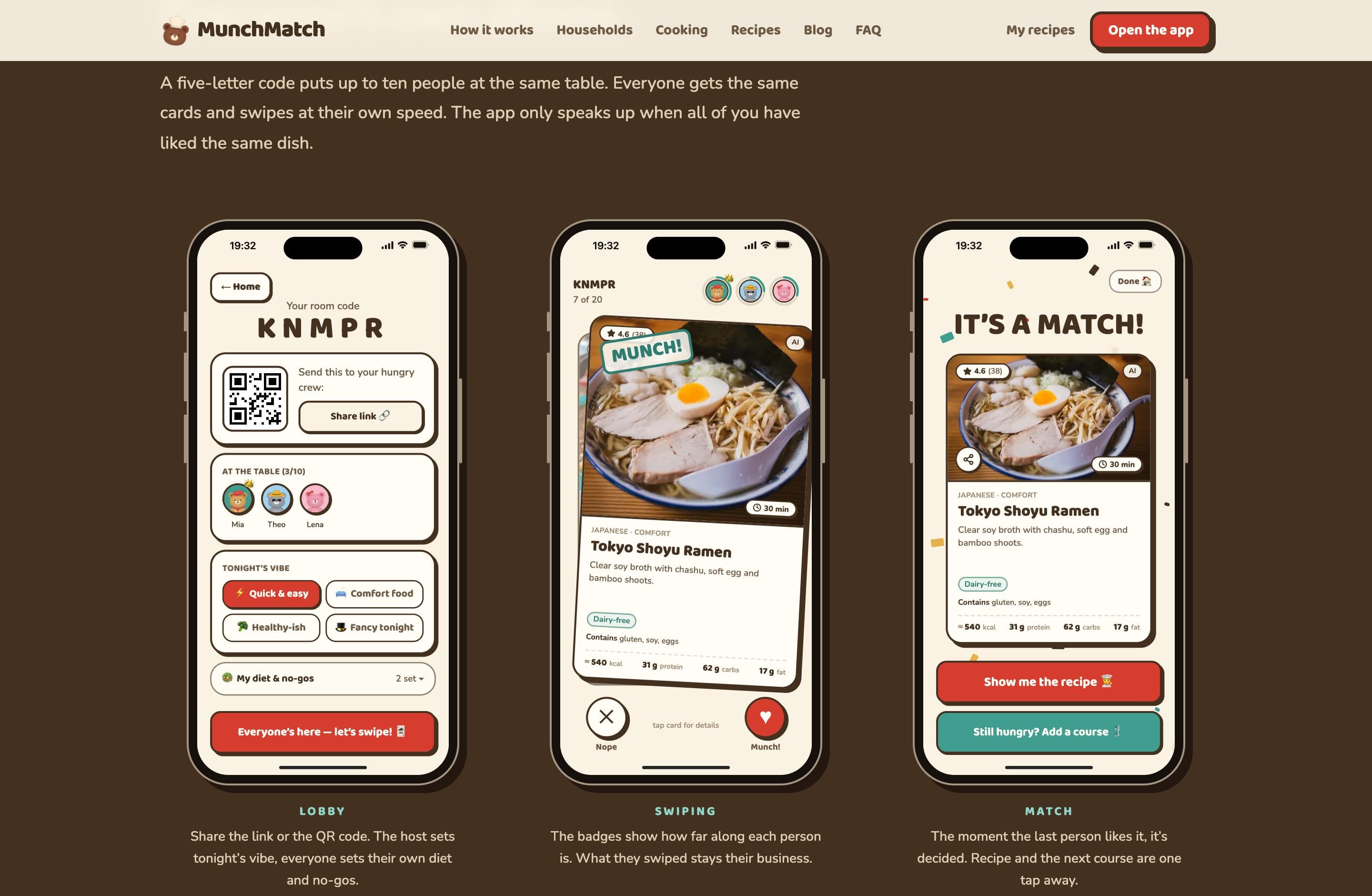
Lobby → swiping → match
No argument, even without a match
If the deck runs out without everyone landing on the same dish, the table votes: a fresh deck or the chef’s pick. A tie is the host’s call. Everyone’s diets and allergens are applied to the deck up front – whatever wins, the whole table can eat.
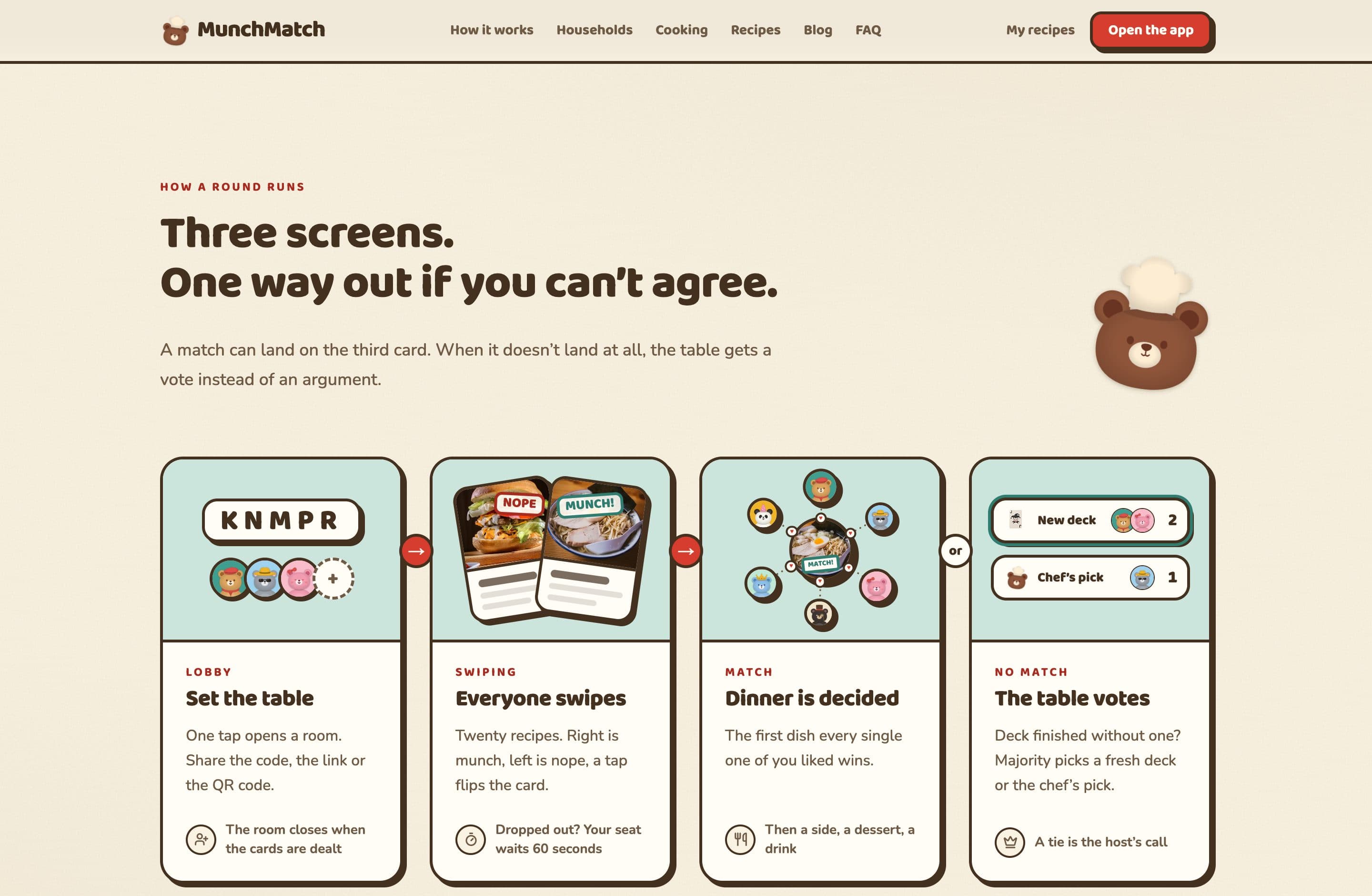
How a round runs
Households and the week plan
Not home at the same time? A household is the standing crew – flatmates, family, a couple. One of you deals a deck for one, three or five meals, everyone swipes when they have a minute, and the result goes onto the week plan and the shopping list in one tap. Push notifications say when it’s decided.
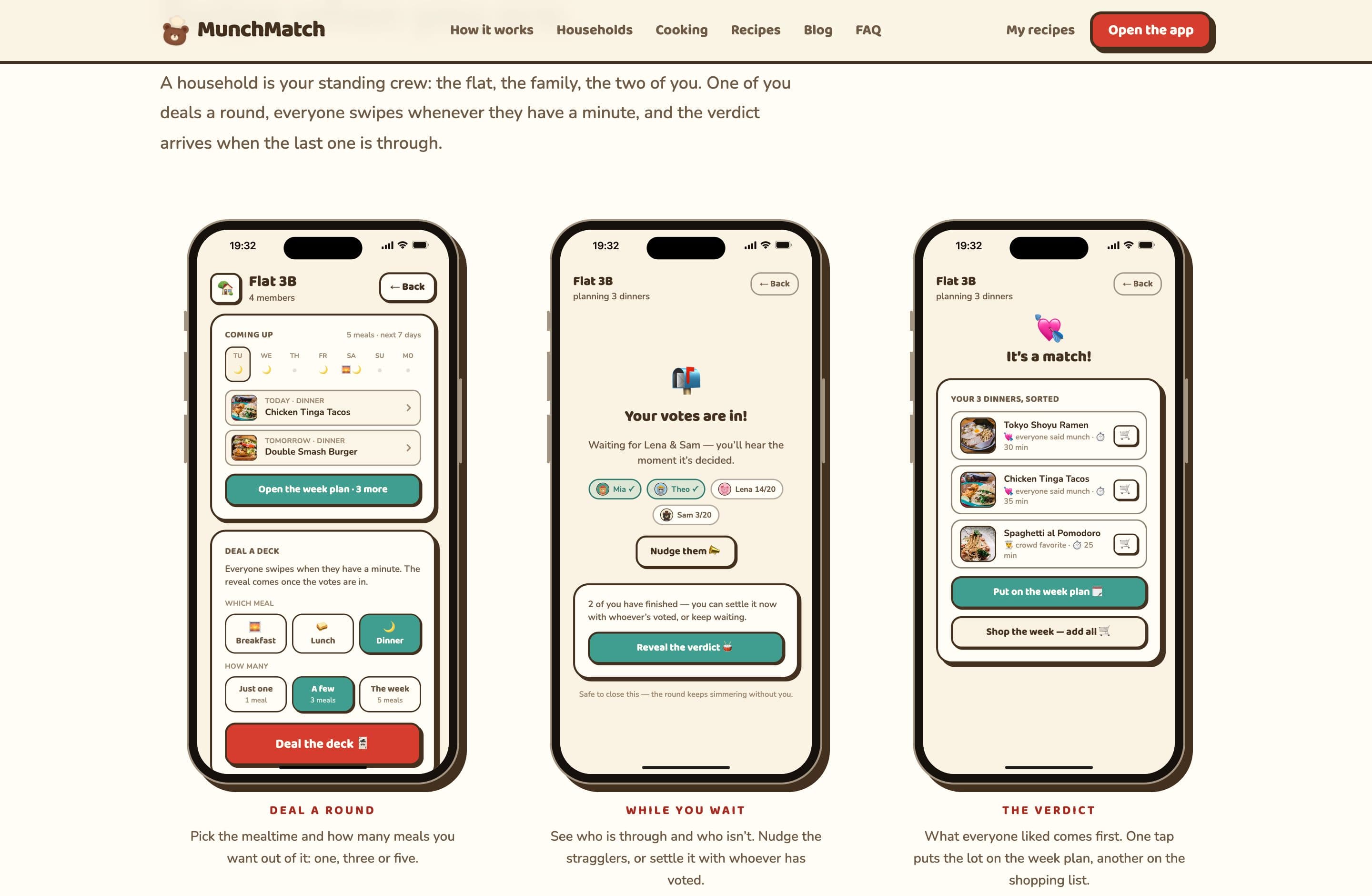
Deciding asynchronously as a household
From the match to the stove
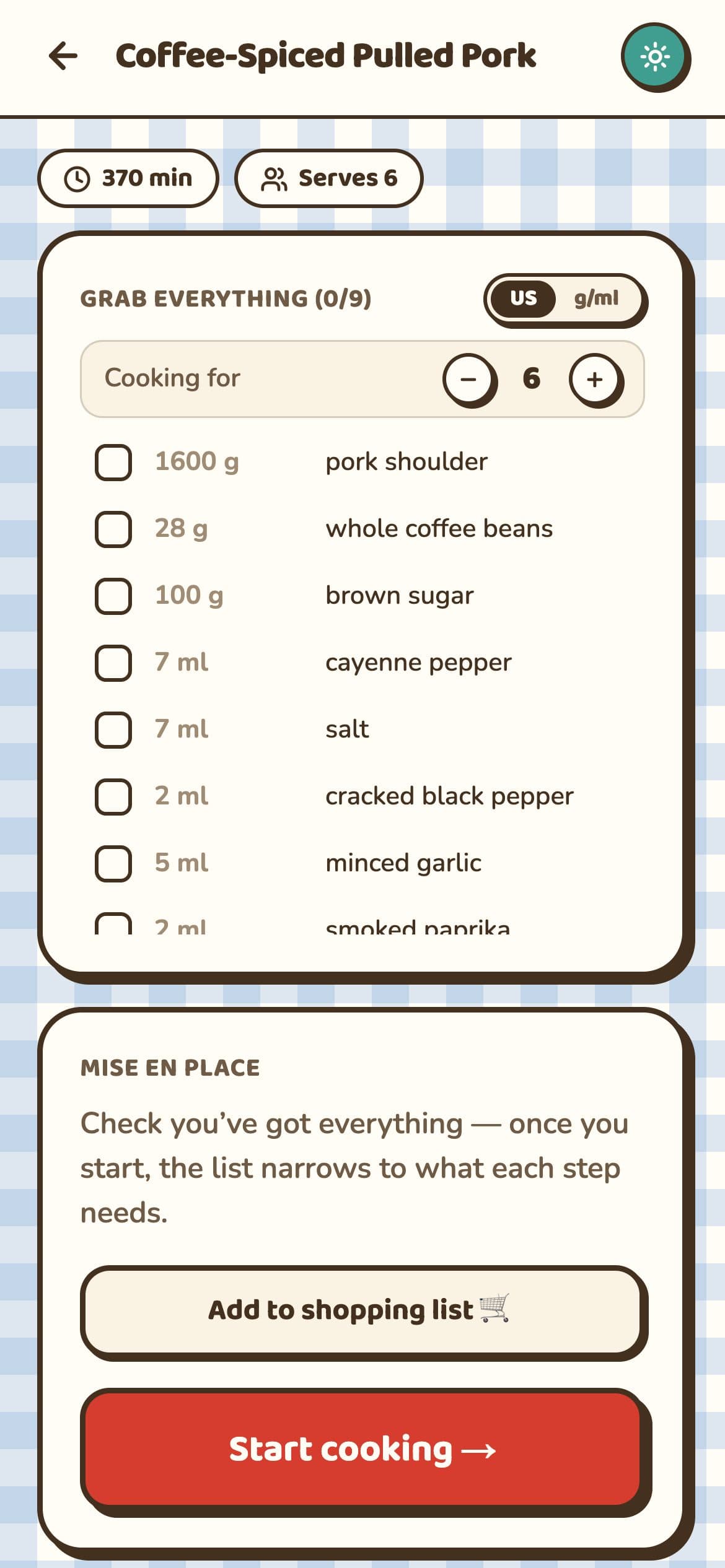
Every match opens as a recipe to cook from: one step per screen in large type, only the ingredients that step needs, timers in one tap and a screen that stays awake. Servings scale from 1 to 12, cups turn into grams. Afterwards the dish can be shared with friends in the feed, with a photo and stars.
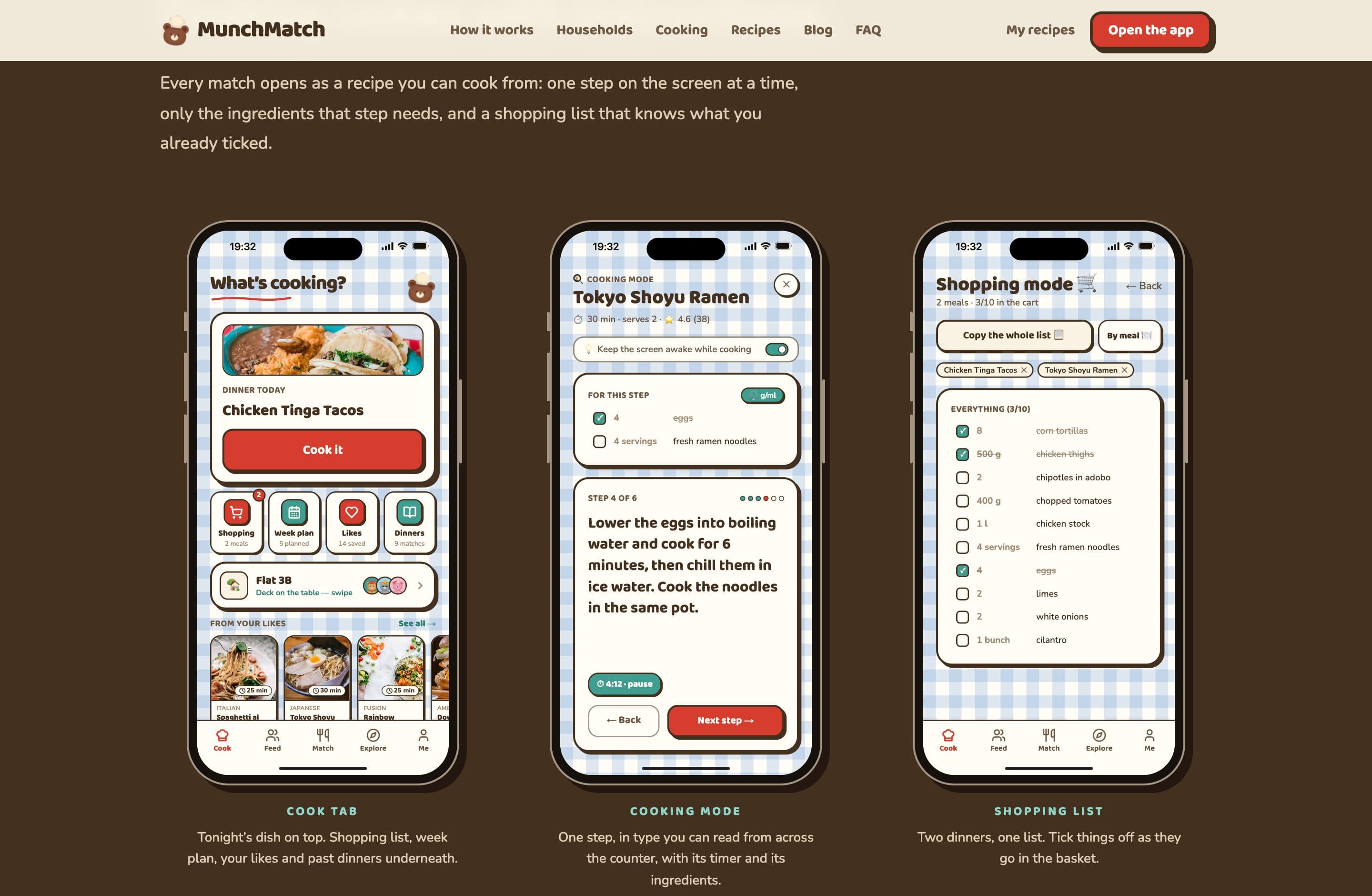
Cook tab, cooking mode, shopping list
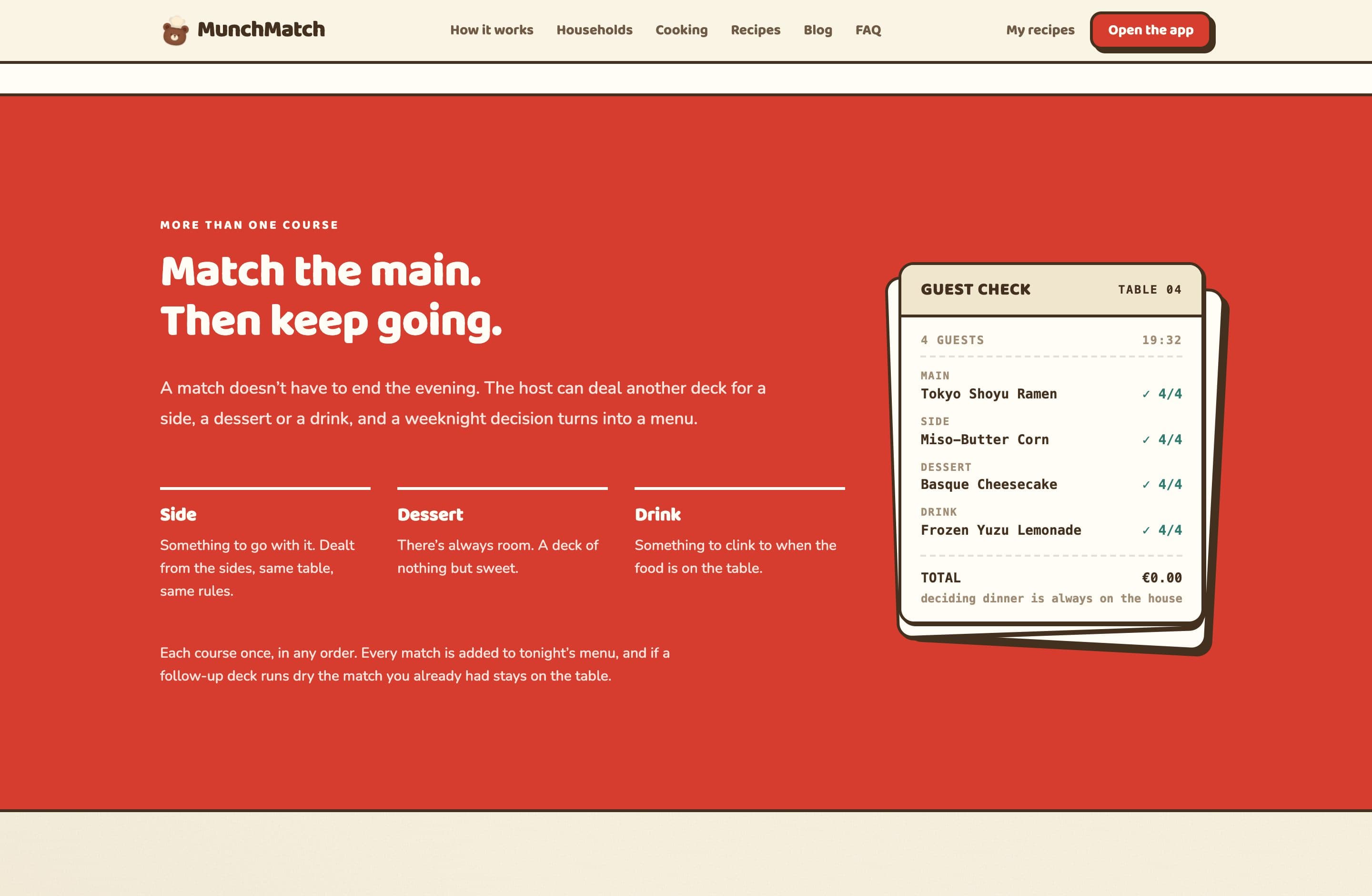
More than one course
A match doesn’t have to end the evening: the host deals another deck for a side, a dessert or a drink – and a quick decision turns into a whole menu.
Up to ten phones have to agree in real time – dead spots included
A dedicated Socket.io server owns the game state; a typed protocol in the shared package keeps client and server in sync, and dropped connections get a grace period before the seat is freed.
Every dish in the deck has to work for everyone at the table
The deck is dealt only after every filter: any player’s allergen excludes a recipe, every requested diet must be met – and an audit script checks that no tag contradicts the ingredients.
A large, credible recipe catalogue without an editorial team
A multi-stage content pipeline with AI rewriting, validation, duplicate detection, generated images and recomputed nutrition – reproducible by script rather than by hand.
Playable instantly, without friction – yet something worth keeping
Anonymous play is the baseline. Signing up keeps likes, match history, custom decks, households and the feed – without guests ever needing an account.
- Real-time rooms for 2–10 people
- Solo, discovery, duo & household rounds
- Diets & 9 allergens as filters
- A vote when no match lands
- Cooking mode with timers & servings
- Shopping list & week plan
- Friends feed with photos & stars
- Push notifications
- Installable as a PWA
Planning something similar?
I build projects like this directly with you – from concept to launch. Briefly describe what you have in mind.